

Researcher Spotlight - Hannah
Crude oil pollution and guppy evolution
Hi Everyone, it’s me!
Happy New Year! (nearly)
This side of the blog is super quiet at the moment - basically because I have nothing to share with you about my research! But some other amazing researchers do, so today we have another Researcher Spotlight post from my lab-mate and awesome PhD Student, Hannah.
Hannah has been instrumental in establishing my love for guppies, and the importance of the research we, and our supervisor’s lab, undertake in Trinidad! So, thank you for that, Hannah.
Keep reading for Hannah’s amazing research! And check back for our virtual Q&A.

Hi all!
I’m Hannah, a 4th and final year PhD student at Royal Holloway, working in the same lab and study area as Lauren!
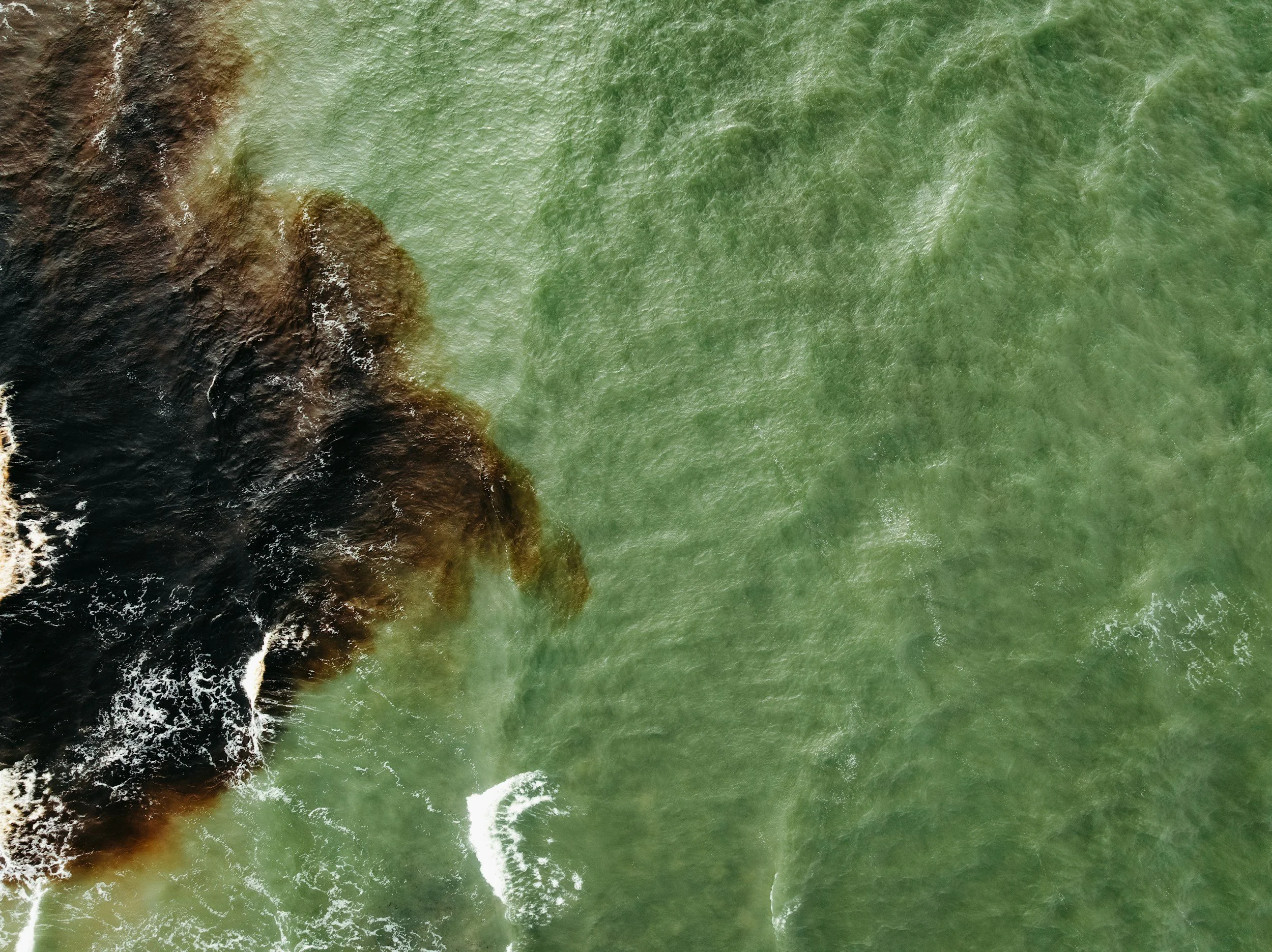
Personally, I haven’t written anything “extra-curricular” since I deleted my Wattpad account in 2011, but it’s probably good to get more practice in before I start writing thousands of words worth of thesis next year….
So if you’re interested in learning about oil pollution, evolution, and tropical fish, read on!
A bit about me first!
I started at Royal Holloway in 2023 with a place on the London NERC DTP (now TREES DLA). I’m really interested in the intersection between evolution and ecology, and particularly how present-day environmental changes affect a species’ evolution.
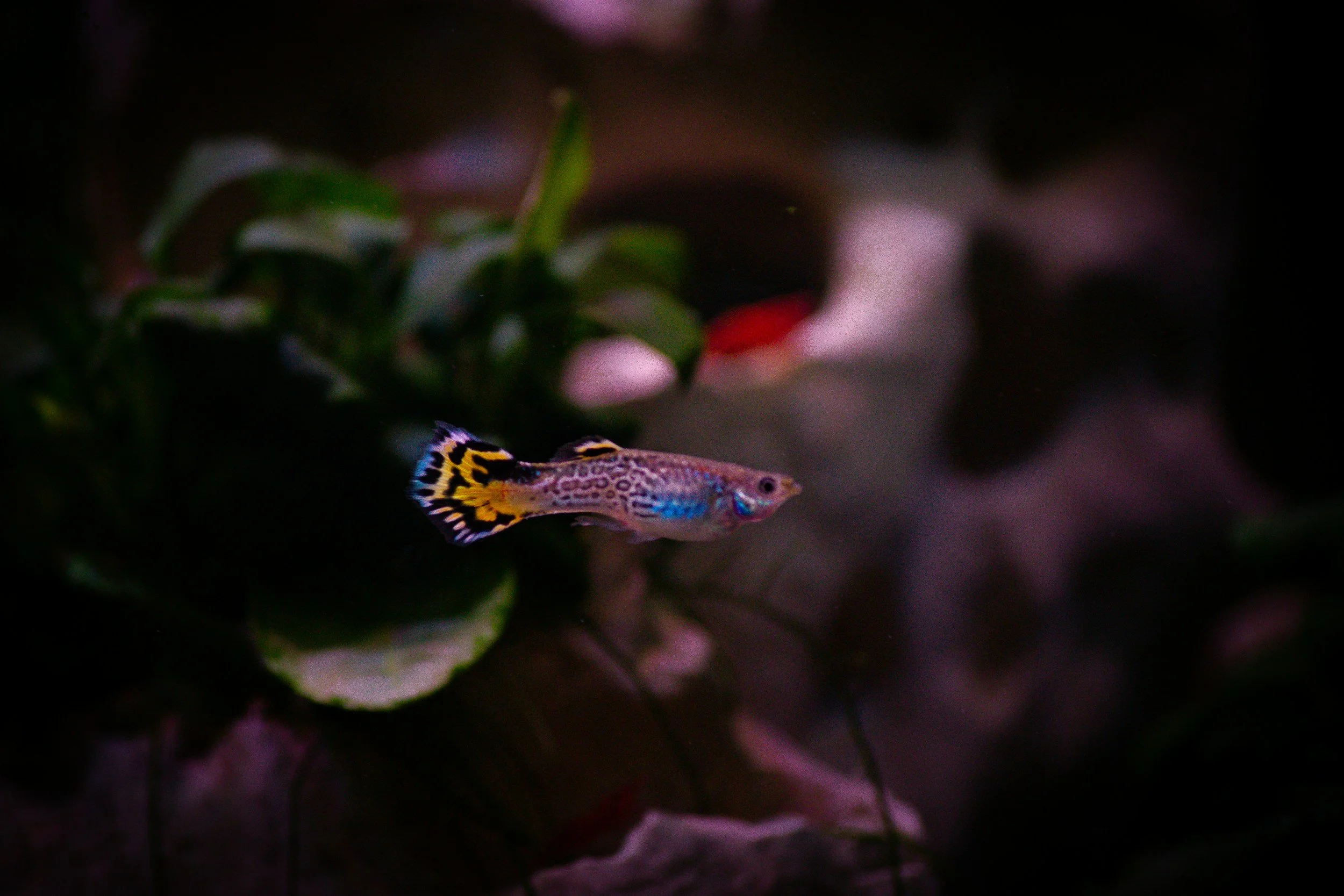
We often think of evolution as a historical process, but the world is still changing (arguably more than it ever has) and there are so many new pressures to respond to, from climate change and habitat loss to antidepressants in our waste water making fish more confident (that’s for real btw, see Gould et al (2021)* for a review if you’re interested. Its pretty wild! ).
Understanding how species are adapting to the challenges we humans have thrown at them is really interesting to me, from both a scientific and also an optimistic perspective. Hopefully, if the world ends, we’ll at least still have guppies!
[Note from Lauren; it’s really hard to find images of wild type guppies! The image above is aquarium stock]
So that leads me to my PhD project: looking at how crude oil pollution affects the evolution of guppies.
Guppies, the small colourful fish you see in Pets At Home, are also incredibly well-studied thanks to their ability to rapidly adapt to different environmental pressures.
This has generally been studied in the context of predators: guppies from high predation environments are less colourful than their low predation neighbours, but if you remove these predators the population becomes brightly coloured in just a few generations.
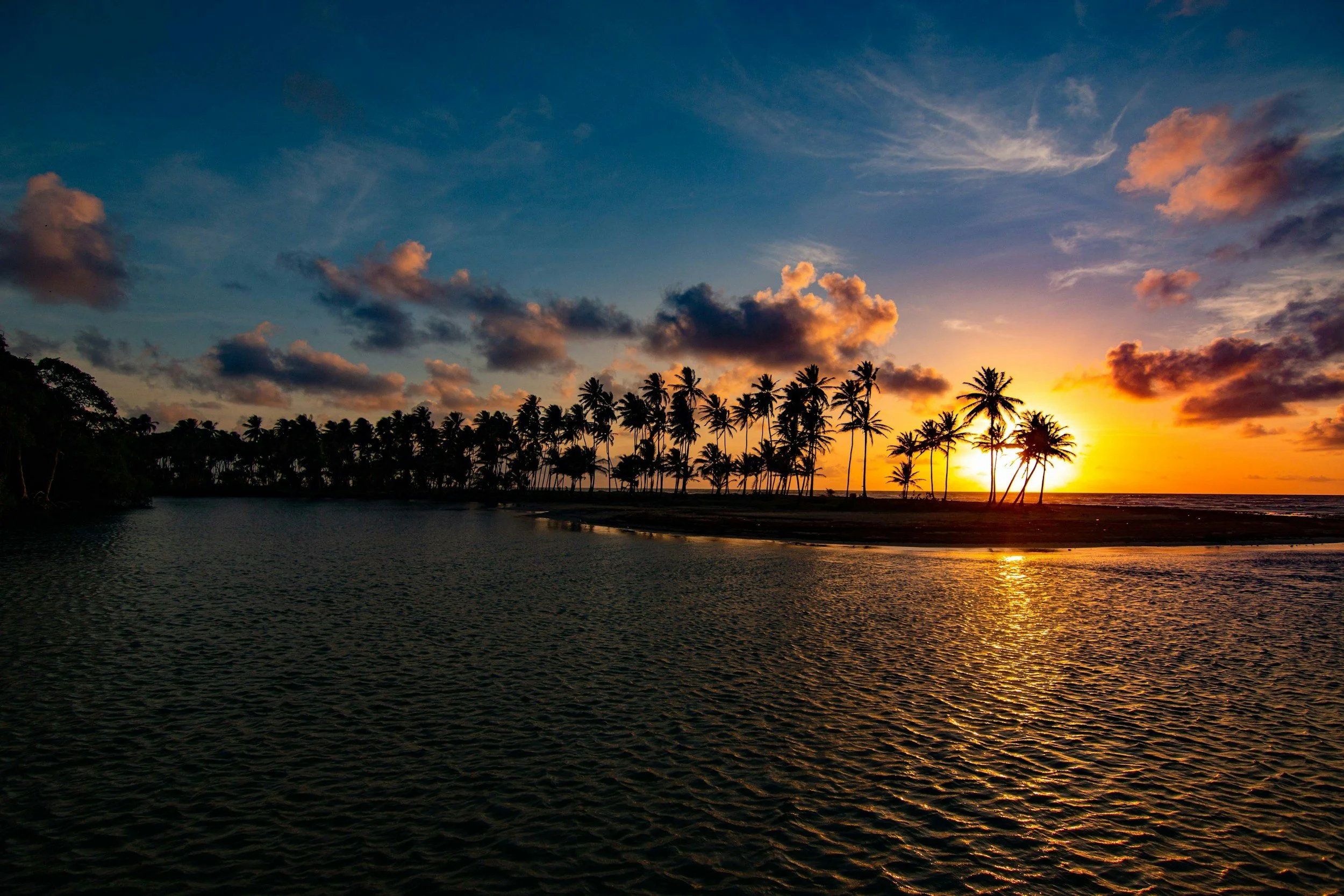
But guppies are also tolerant of a lot of man-made stressors, including, in our case, high levels of water pollution. Which is what took me to Trinidad, home of the guppy and also home to a large number of on-shore oil rigs.
Trinidad & Tobago is a major oil and natural gas producer (over 1/3 of the country’s GDP) but the industry is poorly regulated, with over 1000 oil spills reported between 2016 and 2024, the equivalent of 3.8million gallons, and over 70% of this occurring on land.
These land based oil spills end up in nearby streams, but not all streams will be equally affected. This is a bit of an issue for the animals that live in these waterways but very useful from a science perspective, as it provides a natural experiment to see how crude oil affects related populations in the wild.
Crude oil pollution is a surprisingly understudied field, particularly in freshwater environments, as most studies have looked at immediate impacts following big marine oil spills like the Deepwater Horizon spill. This means there’s lots still to discover, which has both pros and cons in terms of carrying out research…

So what have we found so far?
Unfortunately for me writing my thesis, there aren’t very clear conclusions;
– either oil pollution isn’t actually that big a deal for guppies
- or, more likely, the impacts pollution is having occur across the whole region and are habitat specific.
Guppies from highly polluted habitats don’t seem to be genetically different from their low pollution neighbours. Why is this interesting? Well, it means fish are moving in and out of polluted habitats and mixing between populations, even with the massive cost to fitness associated with oil pollution.
It would be assumed that fish from nice clean rivers wouldn’t fare well in grim polluted rivers, but it seems all the guppies are fine living in either clean or oily habitats.
What we think could be the case is that guppies across the region have at least some adaptation to oil pollution.
Drilling (and therefore spilling) has taken place for over 100 years, meaning over time all rivers and populations would’ve likely been exposed to oil at some point.
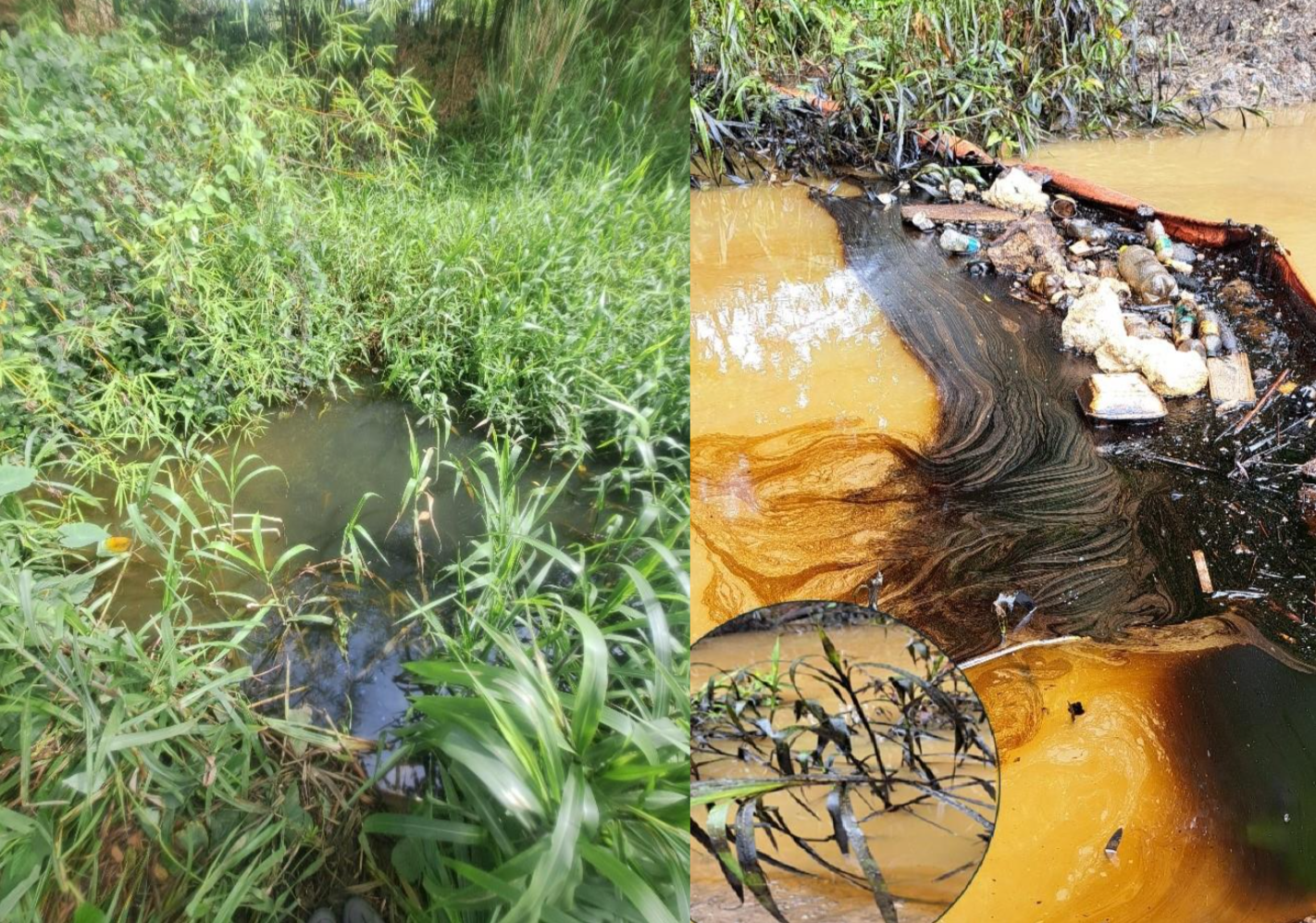
In fact, my own fieldwork has shown how much change in pollution can happen in just a year!
Left: Vance River in 2024.
Right: Vance River at the same spot in 2025.
A floating foam noodle was placed to catch oil flowing into the river. This was likely caused by oil pipe damage during nearby road construction. Crude oil completely coated the plants up and downstream of this “pollution limiting device”.
Image credit H. McGovern, All Rights Reserved
To confirm this though we’d need to compare the genetics of fish from across the whole island to see if there are any unique mutations we only see in fish from polluted regions- mutations that can’t just be explained by random chance. But that’s a very expensive undertaking and as we say in the industry: “beyond the scope of this project”.
So we didn’t find genetic differences… that’s okay! That doesn’t mean guppies in high-pollution habitats aren’t still under massive amounts of environmental and physical stress, even if their ancestors might have experienced these conditions before.

These stressors may still lead to physical differences in the short term, something we call Phenotypic Plasticity - the ability to change a physical trait within your own lifetime. Unstable, high-stress environments can lead to selection for high levels of phenotypic plasticity as organisms need to respond rapidly to a severe change.
We’ve found some evidence for this in these guppies: fish from high pollution environments have developed longer guts - typically common in guppies eating a low quality diet. Why they would do this however is still up for debate, and the lack of previous research becomes a bit of a drawback.
But I suppose it leaves plenty of room for future students to investigate…
What can we take away from this then?
Well, before any Shell or BP execs start gleefully rubbing their hands at the idea that oil pollution isn’t actually that deep, lets reiterate:
Oil pollution is DEFINITELY bad for the environment!
It causes cancer, growth deformities and straight up death in exposed animals (humans included).
Guppies surviving in these environments is a cool and unusual anomaly, and understanding how they’re able to do this is really important to understand mechanisms of resilience - but not every fish is a guppy and we very much DO need to tackle water pollution for the animals that can’t tolerate this.
Perhaps if we take anything from this, it’s that if we want to survive and thrive in this changing world, it’s this flexibility we should also be aspiring to. And also that more research is definitely needed, since there’s still loads we don’t know yet 😉
*Gould et al (2021) – “The potential for adverse effects in fish exposed to antidepressants in the aquatic environment”
Thank you so much to Hannah for contributing her research and findings to C&C! Hannah will soon be finalising data analysis and writing up her PhD thesis - hopefully she’ll write another piece for us at the end of this incredible guppy-filled journey.
It’s super inspiring for me, as I enter into the same lab as Hannah, to follow in her footsteps, and I’m so excited for what I will be able to bring to this area.
In the meantime, if you have any questions for me or Hannah, any suggestions, feedback or interesting topics for the blog, please get in touch.
Until next time!
Researcher Q&A
Coming Soon!
